
Car Service Station Dubai: What Is Included in a Full Car Service?
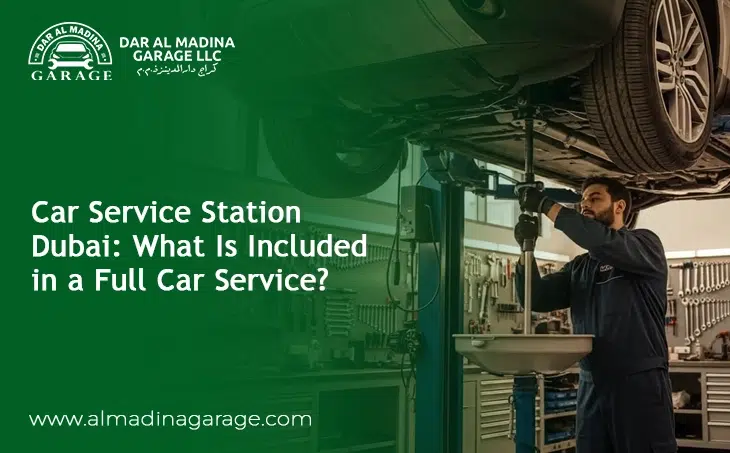
Choosing the right car service station can make a major difference to your vehicle’s reliability, safety, and long-term running costs. A full car service in Dubai is more than an oil change or a quick inspection. It usually involves checking essential mechanical, electrical, fluid, braking, steering, tyre, and engine components to identify problems before they become expensive repairs. If your car is due for routine maintenance, understanding what a complete service includes helps you know what you are paying for and what your vehicle actually needs.
Dubai’s climate, traffic, road conditions, and frequent stop-and-go driving can place additional demands on a vehicle. Regular servicing therefore plays an important role in maintaining performance and preventing unexpected breakdowns.
What Is a Full Car Service?
A full car service is a comprehensive inspection and maintenance procedure designed to assess the overall condition of a vehicle.
Unlike a basic oil service, which focuses on a smaller number of maintenance tasks, a full service covers several systems and components. The exact checklist can vary according to the vehicle’s make, model, mileage, age, service history, and manufacturer recommendations.
A professional car service station in Dubai will normally begin by checking the vehicle’s service requirements and previous maintenance history. Technicians can then inspect the vehicle systematically rather than simply replacing parts based on symptoms.
A typical full service may include:
- Engine oil and filter replacement
- Fluid checks
- Brake inspection
- Tyre inspection
- Battery testing
- Engine diagnostics
- Suspension checks
- Steering inspection
- Air-conditioning assessment
- Lighting checks
- Belts and hoses inspection
- General vehicle safety inspection
Not every vehicle requires the same work at every interval. A good workshop should explain which maintenance tasks are necessary and why.
Why Regular Servicing Matters in Dubai
Dubai’s driving environment can be demanding on vehicles.
High temperatures can affect batteries, cooling systems, tyres, fluids, and air-conditioning components. Heavy traffic can increase braking and transmission demands, while frequent short journeys may place additional stress on certain engine components.
Regular maintenance helps identify developing issues before they turn into major failures.
For example, a technician may discover worn brake pads during a routine inspection. Replacing the pads at the appropriate time is generally far easier and less expensive than allowing worn components to damage other braking parts.
The same principle applies to tyres, engine fluids, belts, hoses, suspension components, and battery performance.
What Does a Car Service Station Check During a Full Service?
A comprehensive service normally follows a structured inspection process.
Engine Oil and Oil Filter
Engine oil reduces friction and helps protect internal engine components. Over time, oil can become contaminated or lose some of its effectiveness.
During a full service, technicians usually check the oil level and condition and replace the oil according to the vehicle’s maintenance requirements.
The oil filter is also important because it helps remove contaminants from the engine oil.
Using the correct oil specification is essential. Different engines require different viscosity grades and specifications, so technicians should follow the manufacturer’s requirements rather than selecting oil based only on price.
Engine and Diagnostic Inspection
Modern vehicles rely on electronic systems to monitor engine performance, emissions, transmission functions, and other components.
A diagnostic scan can help identify stored fault codes that may not yet produce obvious symptoms.
However, diagnostic equipment should not replace physical inspection. A fault code provides useful information, but an experienced technician still needs to determine the underlying cause.
This combination of electronic diagnostics and hands-on inspection gives a more complete picture of vehicle condition.
Brake Inspection at a Car Service Station
Brakes are among the most important safety systems in any vehicle.
A full service should include an inspection of major braking components, including brake pads, discs or rotors, brake fluid, calipers, and other visible components.
Checking Brake Pad Condition
Brake pads gradually wear during normal driving. Their lifespan depends on driving habits, vehicle weight, traffic conditions, road conditions, and the type of brake components installed.
A technician should assess remaining pad material rather than recommending replacement automatically.
Brake Disc and Rotor Inspection
Brake discs can develop wear, scoring, corrosion, or other issues.
If a vehicle experiences steering-wheel vibration during braking, unusual noises, or changes in braking performance, a more detailed brake inspection may be necessary.
Brake Fluid
Brake fluid absorbs moisture over time and can require replacement according to the vehicle manufacturer’s maintenance schedule.
A full service provides an opportunity to check its condition and identify potential leaks or other braking-system concerns.
Tyre and Wheel Inspection
Tyres are the only parts of the vehicle that maintain direct contact with the road, making their condition essential for safe driving.
A professional service should include checking tyre pressure, tread condition, visible damage, uneven wear, and general tyre condition.
Tyre Pressure and Tread
Incorrect tyre pressure can affect handling, braking, fuel consumption, and tyre wear.
Uneven tread wear can also provide clues about wheel alignment, suspension problems, incorrect tyre pressure, or other mechanical issues.
A technician should investigate unusual wear instead of simply recommending replacement.
Wheel Alignment
If the vehicle pulls to one side, the steering wheel is not centred, or tyres are wearing unevenly, wheel alignment may need to be checked.
Alignment is not necessarily part of every routine service, but it can be recommended when inspection results indicate a problem.
Battery and Electrical System Checks
Dubai’s hot climate can be particularly demanding on vehicle batteries.
Battery performance can deteriorate with age, and high temperatures can accelerate certain forms of battery wear.
A full service may include checking:
- Battery voltage
- Battery condition
- Charging-system performance
- Battery terminals
- Alternator operation
- Starter-system performance
Technicians may also inspect lights, indicators, horn, wipers, electrical connections, and other visible electrical components.
A weak battery can result in starting problems, particularly when the vehicle is exposed to demanding operating conditions.
Cooling System Inspection
The cooling system helps maintain appropriate engine operating temperatures.
During a full service, technicians can inspect coolant level, visible leaks, hoses, radiator condition, and related components.
Why Cooling Matters in Dubai
Dubai’s high ambient temperatures make an effective cooling system especially important.
An overheating engine can cause serious damage if the underlying problem is ignored. Low coolant, damaged hoses, radiator problems, thermostat faults, water-pump issues, or cooling-fan failures can all contribute to overheating.
If the temperature warning light appears or the temperature gauge rises above its normal position, the vehicle should be inspected promptly rather than continuing to drive normally.
Air Conditioning Inspection
A functioning air-conditioning system is not simply a comfort feature in Dubai. It is an essential part of everyday driving.
A full vehicle inspection may include checking the cooling performance, visible components, refrigerant-related issues, cabin filter condition, blower operation, and unusual noises.
If the air conditioner is producing weak airflow or insufficient cooling, technicians should identify the cause rather than automatically adding refrigerant.
Potential causes can include a blocked cabin filter, refrigerant leak, compressor problem, condenser issue, electrical fault, or airflow restriction.
Suspension and Steering Checks
Suspension and steering systems affect vehicle control, comfort, tyre wear, and driving stability.
A car service workshop may inspect components such as:
- Shock absorbers
- Struts
- Control arms
- Bushings
- Ball joints
- Tie rods
- Steering components
- Springs
Symptoms such as excessive bouncing, knocking sounds, uneven tyre wear, steering vibration, or instability can indicate suspension or steering problems.
A full service is a useful opportunity to identify these symptoms before they become more serious.
Belts, Hoses and Engine Components
Belts and hoses can deteriorate with age even when the vehicle appears to operate normally.
Technicians may inspect drive belts for cracking, excessive wear, looseness, or damage. Hoses can be checked for leaks, swelling, cracking, or deterioration.
Timing Belt Inspection
Not every vehicle uses a timing belt; some use a timing chain.
Where a timing belt is fitted, replacement should follow the manufacturer’s recommended service interval. A timing-belt failure can cause severe engine damage in some engines.
A reputable car service station should use the vehicle’s maintenance schedule when determining whether timing-belt replacement is due.
Fluid Checks During a Full Car Service
A vehicle depends on several fluids to operate correctly.
Depending on the vehicle, technicians may inspect:
- Engine oil
- Coolant
- Brake fluid
- Transmission fluid
- Power-steering fluid
- Windshield washer fluid
- Differential fluid
- Transfer-case fluid
Not every fluid needs replacement during every service.
The correct approach is to inspect the fluid and follow the manufacturer’s recommended replacement intervals.
Over-servicing can unnecessarily increase maintenance costs, while neglecting fluids can contribute to premature component wear.
Transmission Inspection
The transmission transfers engine power to the wheels and requires appropriate maintenance.
The service requirements differ between automatic, manual, dual-clutch, and continuously variable transmissions.
A technician may check for:
- Fluid leaks
- Unusual noises
- Delayed engagement
- Rough shifting
- Warning lights
- Fluid condition
Transmission-fluid replacement should follow the manufacturer’s recommended procedure and specification.
If a driver notices slipping, harsh gear changes, hesitation, or unusual transmission noises, the issue should be diagnosed rather than waiting until the next scheduled service.
What Happens During a Full Vehicle Inspection?
A good service is not simply a list of parts that need replacement.
The technician should assess the vehicle as a complete system.
This means looking for relationships between symptoms.
For example, uneven tyre wear could be connected to wheel alignment or suspension wear. Brake vibration could be related to disc condition. Repeated battery problems could indicate a charging-system issue.
Experienced technicians use inspection results, vehicle history, diagnostic information, and physical symptoms together when determining what work is appropriate.
This is one of the major differences between preventive maintenance and simply repairing a vehicle after it breaks down.
How Often Should You Service Your Car?
There is no single service interval that applies to every vehicle.
Manufacturers typically provide recommended intervals based on time, mileage, or operating conditions.
A vehicle driven heavily in traffic may experience different wear from one primarily used for highway driving. Likewise, older vehicles may require closer monitoring than newer vehicles.
Drivers should consult the vehicle manufacturer’s maintenance schedule and consider actual usage.
If the car is used frequently for short journeys, heavy traffic, long-distance driving, or demanding conditions, discussing the maintenance schedule with a qualified technician can be useful.
Signs Your Car Needs a Service
You should not always wait for the scheduled service date if the vehicle starts showing warning signs.
Common symptoms include:
- Unusual engine noises
- Reduced acceleration
- Poor fuel economy
- Brake squealing or grinding
- Steering vibration
- Vehicle pulling to one side
- Difficulty starting
- Dashboard warning lights
- Engine overheating
- Weak air conditioning
- Fluid leaks
- Unusual exhaust smoke
- Rough gear changes
A warning light should not automatically be ignored simply because the vehicle continues to drive.
Early diagnosis can sometimes prevent a minor issue from developing into a major repair.
How to Choose the Right Car Service Station in Dubai
With many workshops available, selecting the right service provider can be challenging.
Price is important, but it should not be the only consideration.
Look for Qualified Technicians
A reliable workshop should have technicians with appropriate experience working on the vehicle type and systems involved.
For premium and European vehicles, specialist knowledge can be particularly valuable because these vehicles may require manufacturer-specific diagnostic equipment and procedures.
Ask for a Clear Inspection
A professional workshop should explain what has been inspected and identify any problems found.
Customers should be able to understand which repairs are urgent, which are recommended, and which can be monitored.
Request a Detailed Estimate
Before approving additional repairs, ask for a clear estimate showing parts, labour, and other relevant charges.
This makes it easier to understand the actual cost of maintenance.
Consider Parts Quality
The cheapest replacement part is not always the best option.
Depending on the vehicle and component, customers may choose between genuine, original-equipment, or reputable aftermarket parts.
The appropriate choice should consider vehicle requirements, quality, warranty, budget, and expected service life.
Full Service vs Basic Car Service
A basic service generally covers routine maintenance tasks such as engine oil replacement, filter replacement, and selected inspections.
A full service goes further by examining a wider range of mechanical, electrical, safety, and fluid-related components.
The right option depends on the vehicle’s age, mileage, service history, manufacturer recommendations, and current condition.
A vehicle with a complete and up-to-date maintenance history may not require every possible maintenance task during every visit.
A vehicle with an unknown history, however, may benefit from a more comprehensive inspection.
How Regular Servicing Can Save Money
Routine maintenance may appear to be an additional expense, but preventive servicing can help control long-term vehicle costs.
Replacing a worn belt before failure is generally more manageable than repairing engine damage caused by a broken belt.
Replacing worn brake components at the appropriate time can help prevent additional damage.
Maintaining correct tyre pressure can also reduce unnecessary tyre wear.
The objective of servicing is therefore not to replace every component unnecessarily. It is to identify maintenance needs at the right time.
When Should You Visit a Car Service Station?
You should schedule routine servicing according to your vehicle manufacturer’s recommended maintenance interval.
You should also visit a workshop sooner if you notice:
- Warning lights
- Unusual sounds
- Changes in braking
- Steering problems
- Overheating
- Fluid leaks
- Starting difficulties
- Poor vehicle performance
- Sudden changes in fuel consumption
Ignoring these signs can allow a relatively manageable problem to become a more expensive repair.
Conclusion
A full car service is a comprehensive assessment of your vehicle rather than a simple oil change. A professional car service station should examine essential systems including the engine, brakes, tyres, battery, cooling system, air conditioning, suspension, steering, fluids, transmission, belts, hoses, and electrical components.
For drivers in Dubai, regular maintenance is especially important because high temperatures, traffic congestion, frequent braking, and demanding daily driving can affect vehicle components over time.
The best service approach is not to replace parts unnecessarily. Instead, it is to inspect the vehicle carefully, identify genuine maintenance needs, explain the findings clearly, and complete repairs according to the manufacturer’s specifications.
Choosing an experienced car service station in Dubai can help you maintain vehicle reliability, improve safety, and reduce the likelihood of unexpected breakdowns. Regular servicing is ultimately an investment in the vehicle’s performance and its long-term ownership cost.
Frequently Asked Questions (FAQs)
Q1. What is included in a full car service?
A full car service can include engine oil and filter replacement, brake inspection, tyre checks, battery testing, fluid checks, engine diagnostics, cooling-system inspection, suspension and steering checks, air-conditioning inspection, electrical checks, and general vehicle safety inspection.
Q2. How often should I take my car to a car service station?
The recommended interval depends on the vehicle’s make, model, age, mileage, and manufacturer service schedule. Driving conditions and usage can also influence how frequently maintenance is required.
Q3. Is a full car service different from an oil change?
Yes. An oil change mainly focuses on replacing engine oil and usually the oil filter. A full service involves a broader inspection of mechanical, electrical, safety, fluid, braking, tyre, and other vehicle systems.
Q4. Why is regular car servicing important in Dubai?
Dubai’s high temperatures, heavy traffic, frequent stop-and-go driving, and demanding road conditions can place additional stress on vehicle components. Regular servicing helps identify wear and potential problems before they lead to unexpected breakdowns.
Q5. What should I look for when choosing a car service station?
Look for experienced technicians, transparent estimates, proper diagnostic equipment, quality replacement parts, clear inspection reports, good workmanship, and a willingness to explain which repairs are necessary and why.
Q6. Can regular servicing reduce major repair costs?
Regular servicing can help identify worn or damaged components before they develop into more serious problems. Preventive maintenance may therefore reduce the risk of expensive repairs and unexpected vehicle downtime.


