
RTA Vehicle Inspection Checklist Dubai 2026: How to Pass on First Try
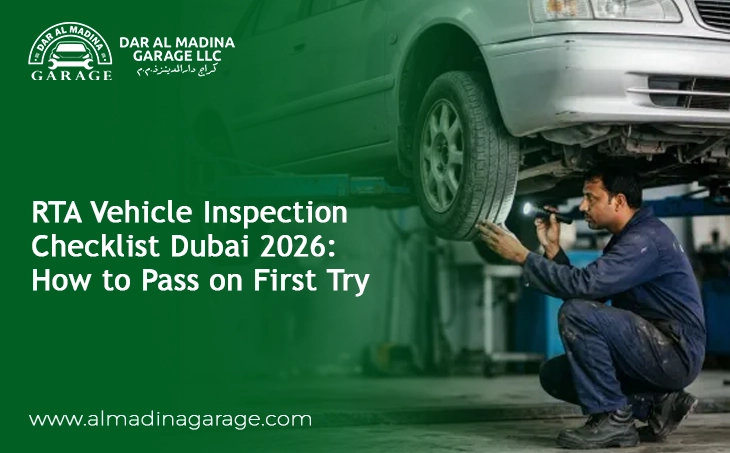
If your registration renewal is coming up and you’re dreading a failed test, here’s the good news: most RTA vehicle inspection Dubai failures come down to a handful of preventable issues worn tyres, a stray warning light, or brake fluid that’s overdue for a change. Fix those before you arrive, and your odds of passing on the first attempt go up dramatically. This guide walks through exactly what inspectors check, what commonly causes a fail, and how to prepare your car so you’re not stuck making a second trip and paying a second fee.
Every year, thousands of Dubai drivers treat their RTA vehicle inspection as a last-minute errand, only to find out at the test centre that a cracked tyre or a dead bulb is going to cost them another appointment and another week of delay. With a bit of preparation, that’s completely avoidable.
What Is the RTA Vehicle Inspection and Who Needs It?
The RTA vehicle inspection Dubai program is a mandatory safety and roadworthiness check administered by the Roads and Transport Authority. It exists to confirm that vehicles on Dubai’s roads meet baseline safety standards before their registration is renewed.
You’ll typically need to pass this inspection if:
- Your vehicle is more than three years old and you’re renewing its registration
- You’re transferring ownership of a used vehicle
- Your car was imported and needs registration for the first time
- You need an export certificate for a vehicle leaving the country
- You operate a commercial vehicle requiring licensing renewal
- You’ve made modifications that require RTA approval
Newer vehicles under three years old are generally exempt from the annual inspection requirement, though this can vary depending on vehicle category and prior registration history.
How Much Does It Cost and How Long Does It Take?
Inspection fees for standard passenger vehicles typically fall in the AED 150–200 range, though this can shift slightly depending on vehicle type and testing centre. Most inspections are completed within 20 to 45 minutes when there’s no queue, though appointment-based booking is increasingly encouraged to reduce wait times. The inspection certificate issued after a pass is generally valid for 30 days, so it’s worth timing your visit close to your actual renewal date rather than weeks in advance.
The Core RTA Vehicle Inspection Checklist
Inspectors work through a structured set of checkpoints covering nearly every major system on your vehicle. Understanding these categories in advance lets you catch problems before an inspector does.
1. Lights and Visibility
Every exterior light is checked — headlights, brake lights, indicators, and reverse lights. A single blown bulb is one of the most common, and most easily avoidable, reasons a vehicle gets sent back for retesting. Non-standard light colours, particularly aftermarket blue or coloured headlight bulbs, are also flagged during this stage.
2. Tyres and Wheels
Tyre condition gets close scrutiny for tread depth, sidewall cracking, and uneven wear patterns that might indicate an alignment issue. A widely cited rule of thumb among Dubai workshops: any tyre older than six years should be replaced regardless of how much tread remains, since UAE heat causes rubber to harden and crack internally well before the tread wears down. This kind of age-related degradation isn’t always visible to the eye, which is why proactive replacement matters more here than in cooler climates.
3. Brakes and Brake Fluid
Brake pads, discs, and the overall braking system are inspected for wear and responsiveness. Brake fluid condition matters too fluid that’s turned dark brown has typically absorbed moisture over time, which lowers its boiling point and can compromise braking performance under sustained heavy use, such as stop-start Sheikh Zayed Road traffic. If your fluid hasn’t been changed in the last two years, it’s worth having it tested before your appointment.
4. Engine and Diagnostic Codes
Modern inspection centres connect a diagnostic scanner to check for stored fault codes, particularly related to the ABS and emissions systems. An unresolved ABS fault code will typically cause an automatic fail, and in many cases, the vehicle won’t be eligible for retesting until that specific fault is cleared and verified. This is one area where a pre-inspection diagnostic scan genuinely pays for itself.
5. Suspension and Steering
Technicians check for excessive play in the suspension and steering components, which can affect handling and, in worse cases, contribute to tyre wear patterns that would otherwise fail the tyre check separately.
6. Body, Chassis, and Structural Condition
Inspectors also look for signs of prior accident damage, mismatched paint that might suggest undisclosed repairs, and any unauthorized modifications to the chassis. Structural alterations — cutting, welding, or drilling into the main frame — are treated seriously, since they can compromise the vehicle’s crash safety rating.
Why Cars Fail: The Most Common Culprits
Based on patterns reported across UAE testing centres, a small number of issues account for the majority of first-time failures:
- Dashboard warning lights left unresolved. Many drivers assume a warning light will “reset itself” or isn’t worth investigating before the test. Inspectors will not pass a vehicle with an active warning light on the dash, regardless of whether the underlying issue seems minor.
- Aged tyres that look fine but aren’t. As mentioned above, the six-year rule catches many drivers off guard, especially on vehicles that are driven infrequently and therefore have plenty of visible tread left.
- Discoloured brake fluid. This is an easy fix that’s frequently overlooked simply because it isn’t something most drivers think to check themselves.
- Non-functional factory lighting. Even a single burnt-out bulb, easily fixed for a small fee, is enough to trigger a fail on its own.
How to Prepare Before Your Appointment
A pre-inspection check at a trusted garage a few days ahead of your RTA appointment is, in our experience, the single most effective way to avoid a wasted trip. A proper pre-check typically covers:
- Full diagnostic scan to catch any stored fault codes before they surface at the test centre
- Visual and physical tyre inspection, including age verification via the tyre’s manufacture date code
- Brake fluid testing for moisture contamination
- Light function check across all exterior lighting
- Suspension and steering play assessment
Garages that perform vehicle maintenance day in and day out tend to spot the small, easily-missed issues that catch first-time test-takers off guard a slightly dim headlight, a hairline tyre sidewall crack, or a fault code that hasn’t yet triggered a visible dashboard warning.
What Happens If You Fail?
A failed inspection isn’t the end of the process — you’ll receive a report listing the specific issues that need addressing. Once repairs are completed, you can return for a retest, though each retest attempt typically carries its own fee. There’s generally no strict limit on how many times you can retest, but repeated failures mean repeated costs and delays, which is exactly why front-loading the preparation work makes financial sense.
RTA Inspection for Different Vehicle Types
While the core checklist applies broadly, a few categories face additional or slightly different scrutiny.
Commercial Vehicles
Trucks, vans, and other commercial vehicles used for business purposes often go through a more detailed inspection, covering load-bearing capacity, commercial licensing compliance, and additional safety equipment relevant to their use case. Fleet operators managing multiple commercial vehicles should budget extra time per inspection compared to a standard passenger car.
Imported Vehicles
Vehicles brought into the UAE from abroad typically require a first-time registration inspection that’s more thorough than a routine renewal. This often includes verifying the chassis number and engine number against import documentation, since discrepancies here can flag a vehicle for further investigation before registration is approved.
Modified Vehicles
If your car has aftermarket modifications performance upgrades, altered exhaust systems, larger wheels, or auxiliary lighting these need to fall within RTA-approved limits. Noise levels, lighting colour, and structural changes are all checked against current standards, and modifications made without prior approval can result in a fail even if the vehicle otherwise runs perfectly.
Why a Professional Pre-Inspection Makes Financial Sense
It’s tempting to skip a pre-inspection check and simply take your chances at the RTA centre, especially if the car seems to be running fine day to day. In practice, the maths rarely favours that approach. A failed inspection means a second visit, a second fee, and in some cases a delay to your registration that can affect your ability to legally drive the vehicle in the interim. Compared to that, a short diagnostic and visual check at a garage — often completed in under an hour — is a small, predictable cost that removes most of the guesswork from your RTA appointment.
Garages that handle RTA-related pre-checks regularly also tend to know which specific issues local testing centres flag most often, which can be genuinely useful if you’re trying to get through the process with minimal back-and-forth.
Registration Renewal Timeline: Don’t Leave It Too Late
Since the inspection certificate is only valid for 30 days, timing matters. Booking your inspection too early means the certificate could expire before you complete registration renewal; booking too late risks running past your renewal deadline if a retest is needed. A practical approach is to schedule your pre-inspection check about two weeks before your planned RTA appointment, leaving enough buffer time to address any issues without rushing.
Final Thoughts
Passing your RTA vehicle inspection Dubai appointment on the first try isn’t about luck it’s almost entirely about catching small, fixable issues before an inspector does. Tyres, lights, brake fluid, and diagnostic fault codes account for the overwhelming majority of failures, and every one of them is checkable in advance with a short pre-inspection visit. Given that a failed test costs you both money and time, a modest investment in preparation is one of the most straightforward ways to keep your registration renewal on schedule.
Frequently Asked Questions
Q1. How much does the RTA vehicle inspection cost in Dubai?
Standard passenger vehicle inspections typically cost between AED 150 and AED 200, though fees can vary slightly by testing centre and vehicle category.
Q2. How long does the RTA vehicle inspection take?
Most inspections take between 20 and 45 minutes when there’s no wait, though booking an appointment in advance helps avoid longer queue times.
Q3. Do all vehicles need an annual RTA inspection?
No. Vehicles under three years old are typically exempt. Inspections generally become mandatory once a vehicle passes the three-year mark, and are required annually after that for registration renewal.
Q4. What happens if my vehicle fails the inspection?
You’ll receive a report detailing the specific issues found. Once those are repaired, you can book a retest, usually for an additional fee, with no strict cap on the number of retest attempts.
Q5. How long is the inspection certificate valid?
The certificate is generally valid for 30 days, so it’s best to schedule your inspection close to your actual registration renewal date rather than well in advance.
Q6. Can I drive my car to the inspection if it has an active warning light?
Yes, you can drive to the appointment, but an active warning light will almost certainly result in a failed inspection. It’s worth having a diagnostic scan done beforehand to identify and resolve the issue if possible.


