
Car AC Not Cooling in Dubai? Causes, Fixes & Repair Costs
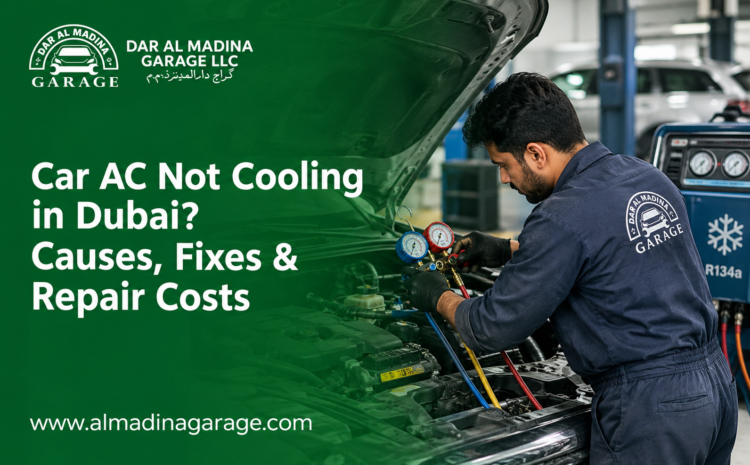
If you’re sitting in traffic on Sheikh Zayed Road with the AC blasting and still feeling warm air, you already know this isn’t a problem you can put off. Car AC not cooling Dubai complaints spike every year as temperatures climb past 45°C, and the reason is almost always one of a handful of specific faults not something mysterious. This guide walks through exactly why your AC has stopped cooling, what you can check yourself before booking an appointment, and realistic repair costs so you’re not caught off guard at the garage.
Whether your air feels lukewarm, barely blows at all, or has stopped cooling entirely, the good news is that most car AC repair Dubai visits trace back to a small set of root causes and catching the issue early almost always costs less than waiting for a full system failure.
Why Car AC Problems Are More Common in Dubai
Extreme heat doesn’t just make a weak AC more noticeable it actually accelerates the wear that causes AC problems in the first place. Rubber seals and hoses dry out and crack faster under sustained high temperatures, refrigerant systems work harder and longer than they would in milder climates, and fine desert dust infiltrates components like condensers and cabin filters more aggressively than in dustier-free environments. This is why a car AC not cooling Dubai issue often appears earlier in a vehicle’s life here than the same model would experience in a cooler market.
Common Causes of Car AC Not Cooling
1. Low or Leaking Refrigerant
This is, by a wide margin, the most frequent cause of a car AC not cooling Dubai complaint. Refrigerant doesn’t get consumed through normal use a system that’s low on refrigerant almost always has a leak somewhere in the lines, seals, or components. Simply topping up refrigerant without finding and fixing the leak is a short-term fix at best; the system will lose pressure again within weeks or months.
Signs: AC blows air but it’s not cold, cooling performance gradually worsens over days or weeks, hissing sound near the dashboard or engine bay.
2. Failing AC Compressor
The compressor is effectively the heart of the AC system, pressurizing refrigerant so it can absorb and release heat properly. When it fails whether due to worn internal components, electrical faults, or a seized clutch the entire cooling process stops, regardless of how much refrigerant is in the system.
Signs: Loud grinding or squealing noise when the AC is switched on, complete loss of cold air, visible clutch not engaging when observed under the hood.
3. Clogged or Damaged Condenser
The condenser sits at the front of the vehicle and releases heat from the refrigerant to the outside air. In Dubai, road dust and debris frequently clog condenser fins over time, reducing the system’s ability to dissipate heat effectively even when refrigerant levels and the compressor are both functioning normally.
Signs: AC cools reasonably well while driving but performance drops noticeably while idling in traffic, warm air specifically when stationary.
4. Blocked Cabin Air Filter
A cabin filter clogged with dust and debris restricts airflow through the vents, making the AC feel weak even if the cooling system itself is working correctly. This is one of the cheapest and easiest issues to fix, yet it’s frequently overlooked since the symptom weak airflow gets mistaken for a refrigerant or compressor problem.
Signs: Airflow feels weak from all vents, musty smell when the AC is first switched on.
5. Electrical Faults
Modern vehicles rely on multiple sensors, relays, and control modules to manage AC operation. A faulty pressure switch, blown fuse, or wiring issue can prevent the compressor from engaging at all, even when every mechanical component is in good condition. This category of fault typically requires proper diagnostic scanning rather than guesswork, since symptoms often overlap with mechanical causes.
Signs: AC works intermittently, cooling stops randomly and sometimes resumes on its own, dashboard AC indicator behaves unusually.
6. Blower Motor Issues
The blower motor pushes air through the vents into the cabin. When it weakens or fails, you’ll get a noticeably reduced volume of air even if that air is actually cold at the source.
Signs: Weak airflow at all fan speeds, unusual noise when adjusting fan speed, air only comes through on certain settings.
What You Can Check Before Calling a Garage
A few quick checks can help you narrow down the issue, or at least give a professional useful information when you do call for car ac repair Dubai service:
- Listen for the compressor clutch engaging when you turn the AC on — a distinct click near the engine bay
- Check if cooling changes with engine RPM — if it improves noticeably when you rev the engine, this points toward a compressor or refrigerant issue rather than a blockage
- Inspect the cabin air filter if accessible — a visibly clogged filter is an easy first fix
- Note whether the problem is constant or intermittent — intermittent issues typically point toward electrical faults
- Check under the vehicle for oily residue near AC lines, which often indicates a refrigerant leak, since refrigerant oil leaves visible traces
Car AC Repair Dubai: Typical Cost Ranges
Repair costs vary significantly depending on the underlying cause, vehicle make, and whether parts need replacement or simple servicing. Based on typical pricing across Dubai workshops:
| Repair Type | Approximate Cost (AED) |
| Cabin air filter replacement | 50 – 150 |
| Refrigerant recharge (no leak) | 150 – 350 |
| Leak detection & repair | 300 – 800 |
| Condenser cleaning | 100 – 250 |
| Condenser replacement | 500 – 1,500 |
| Compressor replacement | 1,200 – 3,500+ |
| Electrical diagnostic & repair | 200 – 600 |
Luxury and European vehicles (BMW, Mercedes, Audi) typically fall toward the higher end of these ranges due to part costs and system complexity, while economy vehicles generally sit closer to the lower bound. Getting a proper diagnosis before agreeing to any repair — rather than accepting a guessed fix — is the single best way to avoid paying for parts you don’t actually need.
Why a Proper Diagnosis Matters More Than a Quick Fix
It’s tempting to simply ask for a refrigerant top-up when the AC feels warm, since it’s the cheapest option on the list. But if the real cause is a leak, a compressor issue, or an electrical fault, a refrigerant recharge alone won’t resolve the underlying problem you’ll be back at the garage within weeks, having spent money without fixing anything. Any reputable car ac repair Dubai service should offer a proper diagnostic check pressure testing, leak detection, and visual inspection before recommending a specific repair, rather than jumping straight to the most common (and most profitable) fix.
Preventive Maintenance to Avoid Future Problems
- Run the AC regularly, even in cooler months, since inactivity can cause seals to dry out and refrigerant to escape more easily
- Replace the cabin air filter every 10,000–15,000 km, or more frequently if you drive in dusty conditions regularly
- Have the system checked annually before peak summer, catching small leaks or wear before they escalate into major failures
- Avoid ignoring early warning signs like slightly reduced cooling addressing issues early is consistently cheaper than waiting for complete system failure
- Park in shade when possible, reducing the load on the AC system and slowing heat-related component wear
When to Visit a Garage Immediately
Some symptoms warrant prompt attention rather than waiting for a scheduled service:
- Complete loss of cooling in extreme heat conditions
- Grinding or squealing noises when the AC is activated
- Visible fluid leaking under the vehicle near the front
- A burning smell accompanying reduced AC performance
- AC that worked fine yesterday and has stopped completely today
DIY vs Professional Repair: Where to Draw the Line
Some AC issues are genuinely safe for a confident car owner to address, while others carry real risk of making the problem worse.
Reasonably safe to attempt yourself:
- Replacing a cabin air filter, which typically requires no special tools
- Visually checking for obvious debris blocking the condenser from outside the vehicle
- Confirming fuses related to the AC system haven’t blown
Best left to a professional:
- Refrigerant handling, since UAE regulations govern the handling and disposal of refrigerant gases, and incorrect handling can also damage the system further
- Compressor diagnosis and replacement, given the complexity and cost of getting it wrong
- Electrical fault-finding, which typically requires proper diagnostic equipment to avoid chasing the wrong symptom
Attempting refrigerant top-ups with off-the-shelf cans purchased without proper equipment is a common mistake — overcharging the system can cause as much damage as running with too little refrigerant, sometimes leading to compressor damage that turns a simple recharge into a much larger repair bill.
How Vehicle Age Affects AC Repair Likelihood
Older vehicles are statistically more likely to develop car AC not cooling Dubai symptoms, simply because rubber seals, hoses, and O-rings degrade over time, particularly under sustained heat exposure. Vehicles in the 5–8 year range often start showing their first refrigerant leaks as original seals begin to harden and crack, while vehicles beyond 10 years frequently need condenser or compressor attention as these components reach the end of their expected service life. This doesn’t mean every older vehicle needs expensive repairs, but it does mean regular preventive checks become more valuable as a vehicle ages, catching small leaks before they escalate into compressor damage from running low on refrigerant for extended periods.
Final Thoughts
A car AC not cooling Dubai situation is rarely a mystery once you understand the handful of components that typically cause it — refrigerant leaks, a failing compressor, a clogged condenser, or something as simple as a dirty cabin filter. Getting a proper diagnosis rather than a guessed fix saves money in the long run, and addressing small issues early is always cheaper than waiting for the system to fail completely in the middle of Dubai’s summer heat. If your AC isn’t performing the way it should, a quick diagnostic visit is worth far more than the discomfort of driving without reliable cooling.
Frequently Asked Questions (FAQs)
Q1. Why is my car AC blowing warm air in Dubai?
The most common cause is low or leaking refrigerant, though a failing compressor, clogged condenser, or electrical fault can produce the same symptom. A proper diagnostic check is the only reliable way to confirm the exact cause.
Q2. How much does it cost to fix a car AC in Dubai?
Costs range from around AED 50 for a simple cabin filter replacement to over AED 3,000 for a full compressor replacement, depending on the vehicle and the specific fault identified.
Q3. Can I just add refrigerant to fix my AC?
Adding refrigerant without identifying the cause of low levels is a short-term fix at best. Since refrigerant doesn’t naturally deplete, low levels almost always indicate a leak that needs to be found and repaired for a lasting solution.
Q4. How often should I service my car’s AC system in Dubai?
An annual AC check before peak summer is generally recommended, along with cabin air filter replacement every 10,000-15,000 km, though dusty driving conditions may require more frequent attention.
Q5. Why does my AC cool well while driving but not while idling?
This pattern often points to a clogged or dirty condenser, since airflow generated while driving helps compensate for reduced heat dissipation, a benefit that disappears when the vehicle is stationary.
Q6. Is it normal for car AC problems to happen more often in Dubai than elsewhere?
Yes. Sustained high temperatures and dust exposure accelerate wear on seals, hoses, and condenser components faster than in cooler, less dusty climates, making AC issues more frequent and often appearing earlier in a vehicle’s lifespan.


